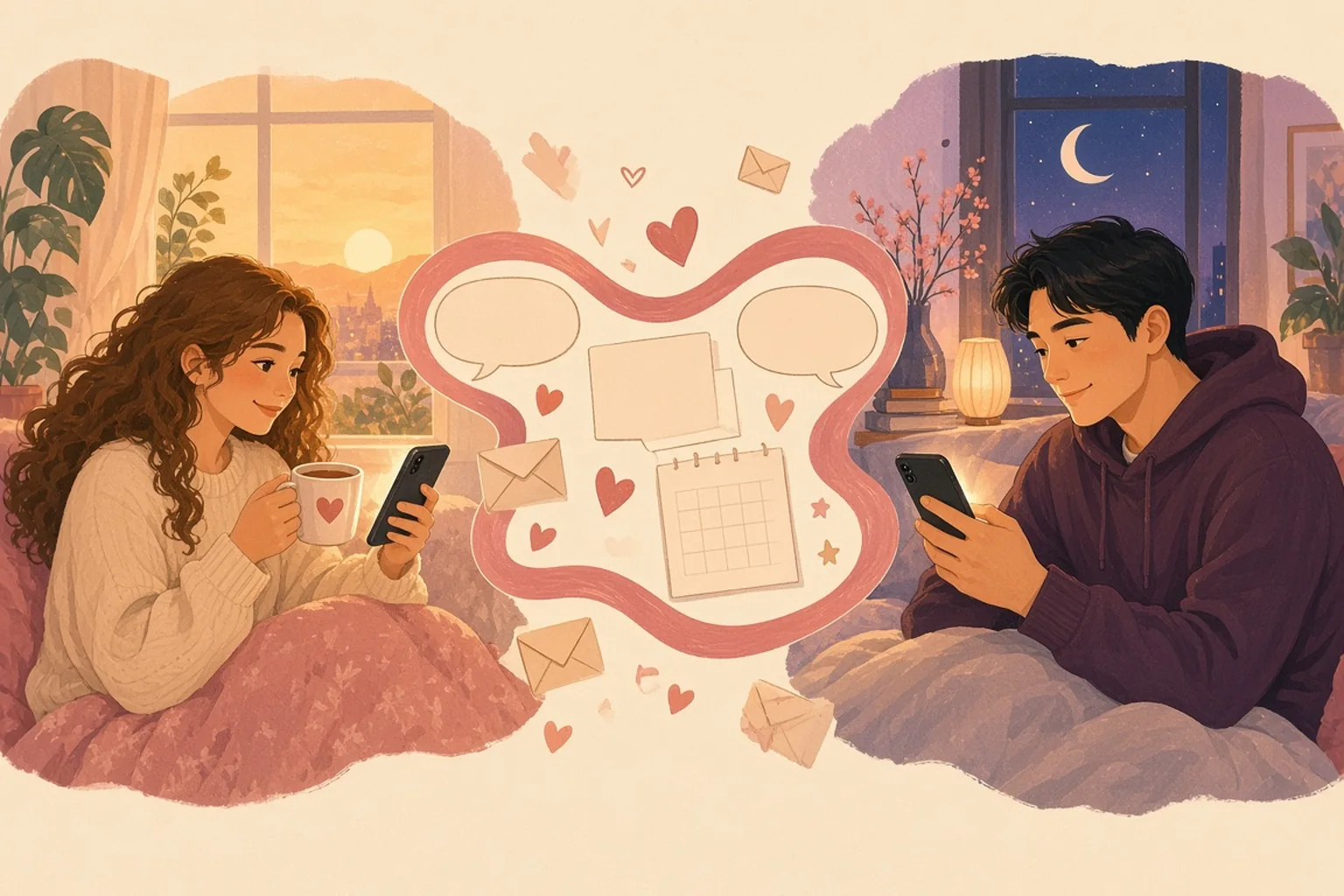


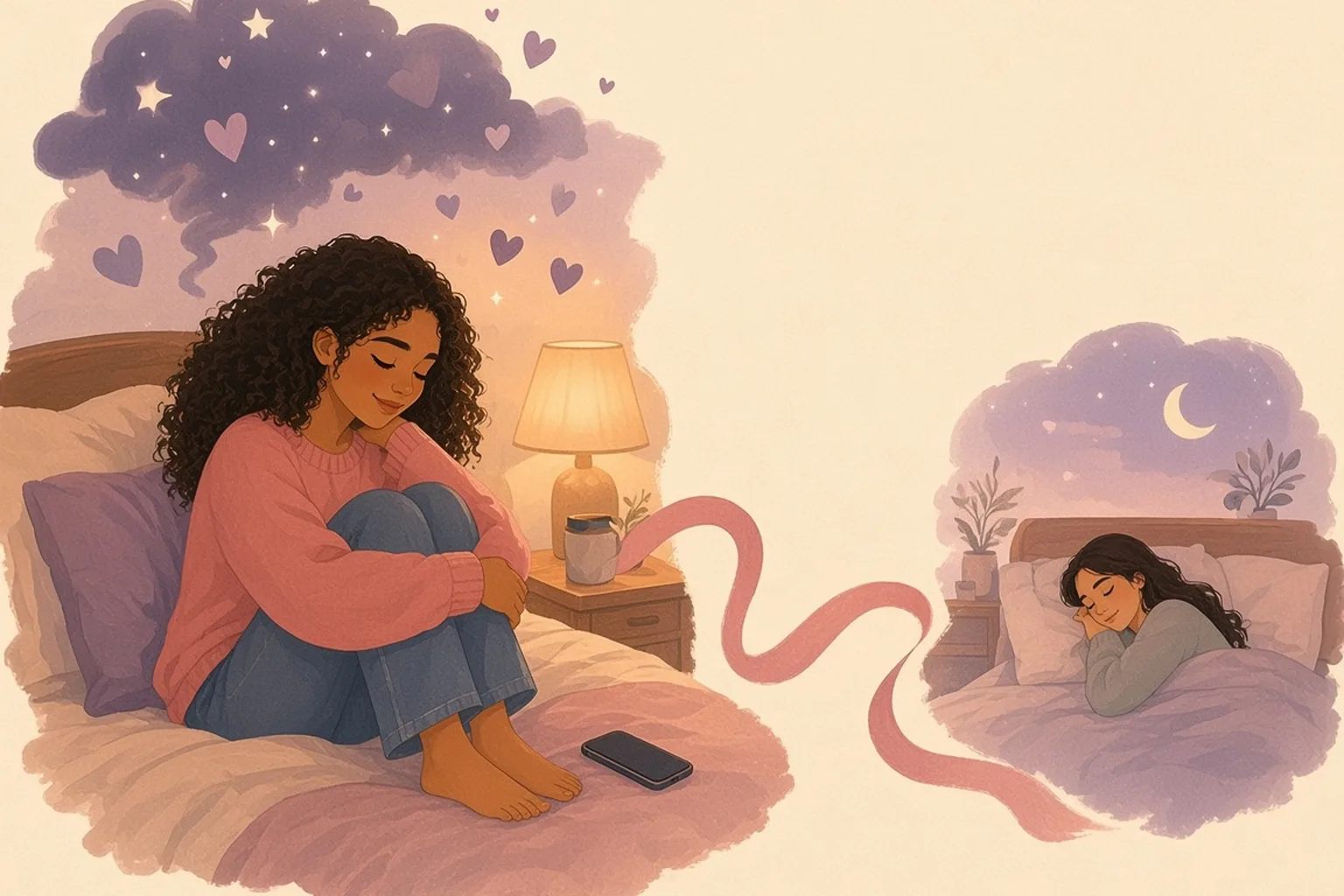
Anxiety in a long-distance relationship is common. When you cannot see your partner, small things such as a slow reply, a cancelled call or a new friend in their photos can set off a spiral of worry. It does not mean your relationship is failing, and it does not mean you are ‘too much’. This guide covers why long distance can cause anxiety, what helps in the moment, how to talk about it with your partner and when to get extra support. It is general information, not a diagnosis and not a substitute for care from a doctor or counsellor.
Can a long-distance relationship cause anxiety?
It can make anxiety more likely. Distance means less information: you do not see your partner's face, their day or their mood. The mind fills the gaps, often with worst-case stories. People who already tend to worry, or who have been hurt before, may feel this more strongly.
Common triggers
Pick the ones that suit the moment, skip any that do not, and add your own follow-ups.
- Slow replies or ‘seen’ with no answer.
- Cancelled or short calls.
- Time-zone gaps and long silences overnight.
- Seeing them out with people you do not know.
- The days after a visit.
- Uncertainty about when you will next meet or close the distance.
What helps in the moment
When the spiral starts, slow down before you send anything.
Ground yourself
First two minutes
Breathe slowly in for four, out for six, a few times. Name five things you can see. Put the phone down for ten minutes.
Check the story
Then think
Ask: what do I actually know? What else could explain this? Usually the honest answer is ‘They are busy’.
Do something else
Then wait
Go for a walk, text a friend, make tea. Come back to the message later.
How to talk to your partner
Share how you feel without blaming. ‘When I do not hear from you all evening, I start to worry. Could you send a quick message if you will be out late?’ is easier to hear than ‘You always ignore me’. Ask for specific small things, such as a goodnight message or a heads-up when plans change.
Routines that reduce anxiety
Uncertainty feeds anxiety, and routines reduce uncertainty. Agree on a weekly call rhythm, a goodnight ritual and how you will let each other know about changes. Keep a date for the next visit on the calendar.
Look after yourself
Sleep, food, movement and friends all make anxiety easier to manage. Keep your own plans and interests going; they give your mind something other than the relationship to focus on.
When to get support
If anxiety is constant, affects your sleep, eating, work or studies, or you feel panicky or low most days, talk to a doctor or a counsellor. Anxiety is very treatable. If you ever feel unsafe, contact local emergency services or a crisis line straight away.
Q & A
A few questions you might have
How do you deal with long-distance relationship anxiety?
Ground yourself before reacting, check the story you are telling yourself, agree on routines with your partner and keep your own life full.
Can a long-distance relationship cause anxiety?
Distance can trigger or increase anxiety because you have less information about your partner's day. It is common and manageable.
How do I tell my partner I feel anxious?
Use calm ‘I feel’ language and ask for one specific, small thing, such as a goodnight message.
When should I get help for relationship anxiety?
If it affects your sleep, eating, daily life or you feel low most days, speak to a doctor or counsellor.
Found an idea for the two of you?
Send it to your person and choose something to try together.